What Is Scroll? Bytecode zkEVM Explained 2026
— By AliceOnChain in Tutorials

Scroll explained: this 2026 guide breaks down its bytecode-equivalent zkEVM, why it is called an Ethereum twin, and how it scales the open economy.
What is Scroll? Bytecode-Equivalent zkEVM Explained
The Ethereum scaling landscape is often divided between two philosophies: those who prioritize rapid execution speed and those who prioritize deep compatibility with Ethereum’s original architecture. Among the Zero-Knowledge (ZK) rollup solutions, Scroll has distinguished itself by focusing on a high degree of bytecode equivalence. If you are asking what is Scroll, you are looking at an L2 network that aims to provide a highly Ethereum-equivalent execution environment for developers, allowing the Ethereum Virtual Machine (EVM) to be replicated with minimal friction.
By mid-2026, Scroll has established itself as a preferred layer for developers seeking stability and security in the ZK-Rollup space. For the DEXTools community, Scroll represents a sophisticated environment where complex DeFi strategies can be ported from the mainnet with high efficiency and developer portability.
The Technical Edge: Understanding Bytecode Equivalence
One cannot fully understand the network without grasping the nuances of EVM compatibility. While many L2s are "EVM-compatible" at the language level (Solidity), Scroll focuses on equivalence at the bytecode level.
This design choice means that Scroll’s zkEVM aims to process the same opcodes as the Ethereum mainnet.
Minimized Adaptation: By avoiding complex translation layers or compilers used by other ZK-Rollups, Scroll reduces the potential for bugs introduced during code transpilation.
Tooling Portability: Most auditors, debuggers, and developer tools that operate on Ethereum can be utilized on Scroll with very few adjustments.
Infrastructure Alignment: As Ethereum evolves, Scroll’s architecture is designed to integrate L1 upgrades more naturally due to its close alignment with the base layer’s internal logic.
When exploring what is Scroll in 2026, it is best described as one of the most faithful implementations of the Ethereum execution environment currently available.
How Scroll Scales Ethereum: The Three-Layer Architecture
The protocol achieves scalability by decoupling transaction execution from the cryptographic proof generation process. This allows the network to maintain competitive fees even during periods of increased activity.
Settlement Layer: This is the Ethereum mainnet. Scroll uses the L1 as its ultimate source of truth, where it anchors transaction data and verifies the ZK-proofs.
Sequencing Layer: This layer is responsible for ordering transactions on the L2. Throughout 2025 and 2026, Scroll has continued working toward the gradual decentralization of its sequencer set to improve network resilience.
Proving Layer: This specialized network of "provers" generates the ZK-proofs (Zero-Knowledge Proofs) that mathematically verify the correctness of every transaction batch before they are finalized on Ethereum.
The SCR Token and Governance Trajectory
The SCR token is a central component of Scroll’s move toward long-term sustainability. In the context of the 2026 ecosystem, its utility reflects the project's focus on decentralized infrastructure:
Incentivizing the Prover Network: SCR is utilized within the prover ecosystem to align incentives for those generating the cryptographic proofs necessary for network finality.
Protocol Governance: SCR holders participate in a DAO structure that oversees developer grants and technical parameters, focusing on the long-term growth of the zkEVM ecosystem.
Security Contributions: The network has been exploring staking models where SCR contributes to the overall robust nature of the sequencing and proving layers.
On DEXTools, monitoring the liquidity and market performance of SCR offers insight into the adoption of Ethereum-equivalent scaling solutions. Despite a crowded L2 market, Scroll’s commitment to technical standards has maintained interest from security-conscious liquidity providers.
The 2026 Ecosystem: Evolution and Technical Milestones
As of mid-2026, the project has reached several key milestones in its roadmap, reflecting its position in the broader ZK-rollup landscape:
Proving Efficiency: Scroll has been exploring hardware-assisted proof generation to reduce the time-to-finality on Ethereum, making the bridging experience more efficient for users.
Developer Portability: The network continues to prioritize "zero-config" deployments for Ethereum dApps, though most protocols still perform routine infrastructure audits when migrating to L2.
Scalable Data Availability: By optimizing how data is published to the L1, Scroll has worked to keep transaction fees in a highly competitive range for DeFi users.
Trading on Scroll with DEXTools
For traders, the Scroll experience is defined by consistency and low overhead. By using the DEXTools Pair Explorer and filtering for the Scroll network, users can access analytical data for its native DeFi ecosystem.
Competitive Fees: Transaction costs on Scroll remain significantly lower than the mainnet, facilitating multi-step DeFi strategies that would otherwise be cost-prohibitive.
Liquidity Integration: Because developers can port existing Ethereum protocols with high fidelity, Scroll often hosts established DeFi primitives alongside new, L2-native projects.
Analytics and Verification: DEXTools provides the necessary transparency to monitor volume and verify pair authenticity on Scroll, which is essential for navigating any growing L2 ecosystem.
Security Model: Built on Collaboration
When researching what is Scroll, the security model is often highlighted for its transparency. Built in collaboration with members of the Ethereum Foundation’s Privacy and Scaling Explorations team, the network prioritizes cryptographic integrity.
Validity Proofs: Every transaction is backed by a mathematical proof verified by the Ethereum L1, offering a different security profile than optimistic rollups.
Open Source Development: The codebase has remained open-source, allowing for continuous community auditing and technical feedback.
Managed Upgrades: In 2026, the network operates under a governed upgrade mechanism, aimed at balancing operational agility with the need for decentralized oversight.
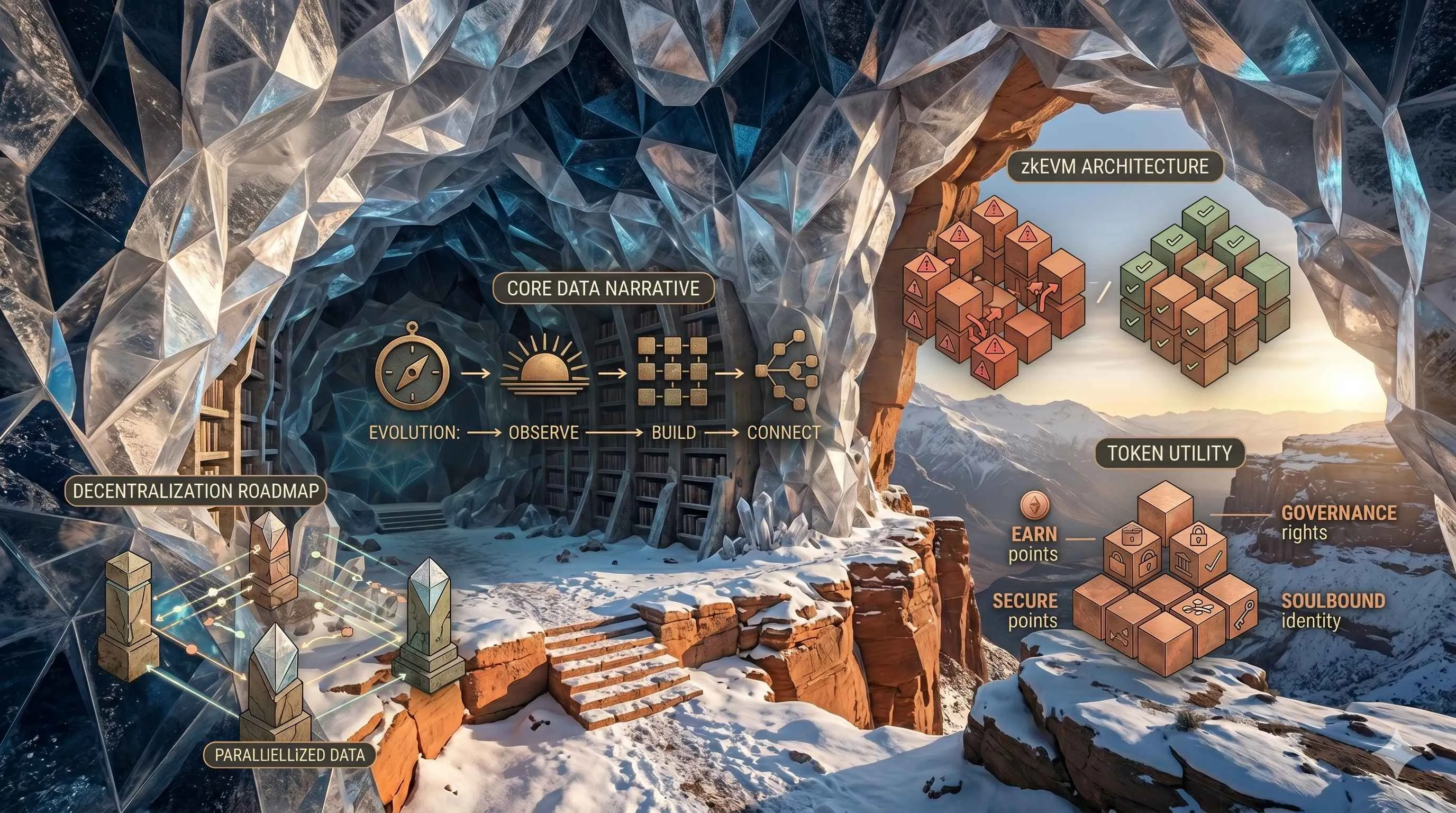
Conclusion
Understanding what is Scroll requires an appreciation for a disciplined approach to blockchain engineering. In an industry often focused on immediate hype, Scroll has prioritized an execution environment that respects the technical standards of Ethereum. By achieving a high degree of bytecode equivalence, it offers a seamless extension of the mainnet that provides the same developer tools with the added benefits of L2 scaling. As we move through 2026, Scroll remains a significant infrastructure layer for those who value security, developer portability, and the long-term vision of a modular Ethereum.
- How to Bridge Crypto Between Chains: Complete Cross-Chain Tutorial 2026
- How to Use 1inch: Complete DEX Aggregator Swap Tutorial (2026)
- How to Use OKX Web3 Wallet: Multi-Chain DeFi Hub Guide (2026)
--
Disclaimer: This article is for informational purposes only and does not constitute investment advice, financial advice, trading advice, or any other kind of advice. DEXTools does not recommend buying, selling, or holding any cryptocurrency or token. Users should conduct their own research and consult with a qualified financial advisor before making any investment decisions. Cryptocurrency investments are volatile and high-risk. DEXTools is not responsible for any losses incurred.
Related Guides
- zkEVM Types Compared: Polygon vs zkSync vs Scroll 2026
- What Is Taiko? Type 1 ZK EVM Ethereum Equivalent L2 Guide 2026
- What is Polygon zkEVM? Architecture and Use Cases (2026)
- What is Linea? ConsenSys zkEVM Beginner Guide (2026)
Frequently Asked Questions
What is Scroll in crypto?
Scroll is an Ethereum layer 2 network that uses zero-knowledge proofs to scale Ethereum while aiming to stay closely compatible with it. It is designed to process transactions more cheaply while settling back to Ethereum.
What is a bytecode-equivalent zkEVM?
A bytecode-equivalent zkEVM aims to match the Ethereum Virtual Machine at the bytecode level, so existing contracts and tooling can work with minimal changes. This level of compatibility is meant to make migrating applications easier.
Why is Scroll called an Ethereum twin?
It is described that way because it strives for close equivalence with the Ethereum environment, so developers can reuse familiar code and tools. The goal is an experience that mirrors Ethereum while offering layer 2 scaling.
How does a zkEVM help scale Ethereum?
A zkEVM bundles many transactions and uses zero-knowledge proofs to verify them efficiently on Ethereum, reducing the work the main chain must do directly. This can lower costs and increase throughput compared with executing everything on layer 1.